

An MVP built by a US agency usually costs $40,000 to $120,000, and the same scope from a senior UK studio typically costs $25,000 to $80,000. A no-code or clickable prototype can be done for $5,000 to $20,000, while an MVP that needs payments, real-time features or regulated data can pass $150,000. The right figure depends far more on what you leave out than on what you put in.
We have helped founders launch first versions since 2007, from Dabbl, a stock trading app for first-time investors, to DRSR, a social commerce platform. This guide gives US founders realistic numbers in dollars and shows how to spend them well. All figures are market estimates, not quotes. Our UK guide, the MVP cost guide, covers the same ground in pounds.
Key facts
- Clickable prototype: $5,000 to $20,000, 2 to 4 weeks.
- Lean MVP (one platform or cross-platform, core journey only): $25,000 to $60,000, 8 to 12 weeks.
- Standard MVP (accounts, payments, admin): $60,000 to $120,000, 3 to 5 months.
- Complex MVP (marketplace, real-time, regulated data): $120,000 to $200,000+.
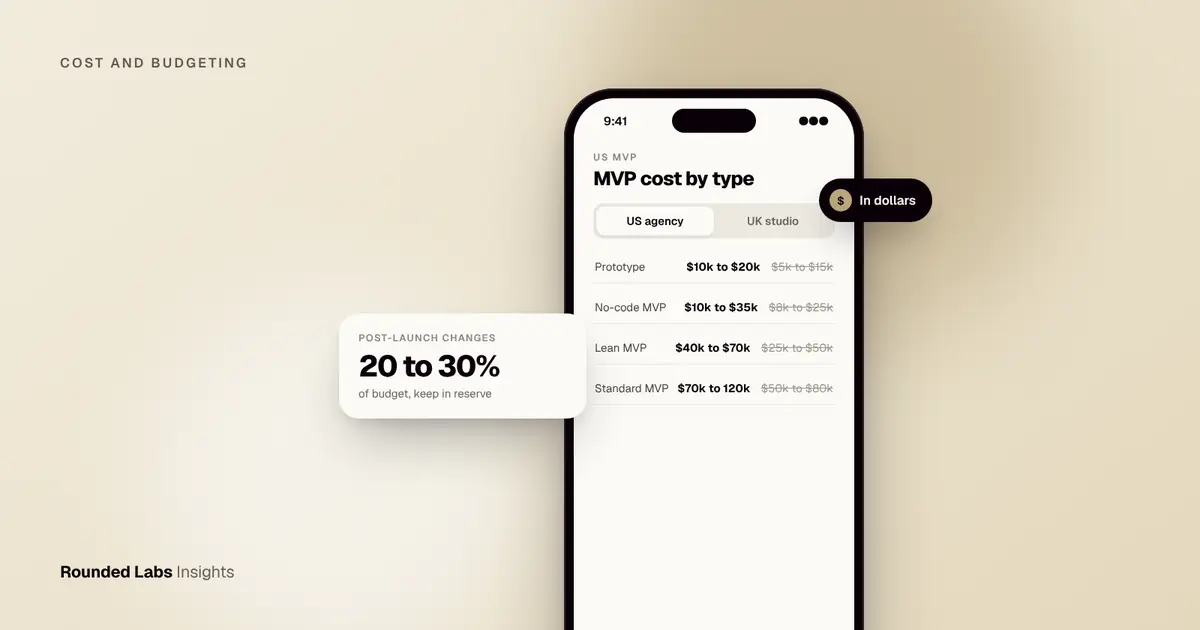
- Keep 20 to 30% of your budget for changes after launch.
How much does an MVP cost by type?
| MVP type | What it includes | US agency | UK studio (in $) | Timeline |
|---|---|---|---|---|
| Clickable prototype | Designed screens, no real backend | $10,000 to $20,000 | $5,000 to $15,000 | 2 to 4 weeks |
| No-code MVP | Built on Bubble, FlutterFlow or similar | $10,000 to $35,000 | $8,000 to $25,000 | 4 to 8 weeks |
| Lean coded MVP | One core journey, login, simple backend | $40,000 to $70,000 | $25,000 to $50,000 | 8 to 12 weeks |
| Standard MVP | Accounts, payments, notifications, admin panel | $70,000 to $120,000 | $50,000 to $80,000 | 3 to 5 months |
| Complex MVP | Two-sided marketplace, real-time, HIPAA or fintech rules | $120,000 to $250,000 | $80,000 to $180,000 | 5 to 8 months |
What is an MVP explains what an MVP is and is not, and Low-code vs custom app development compares no-code with custom code.
What drives MVP cost?
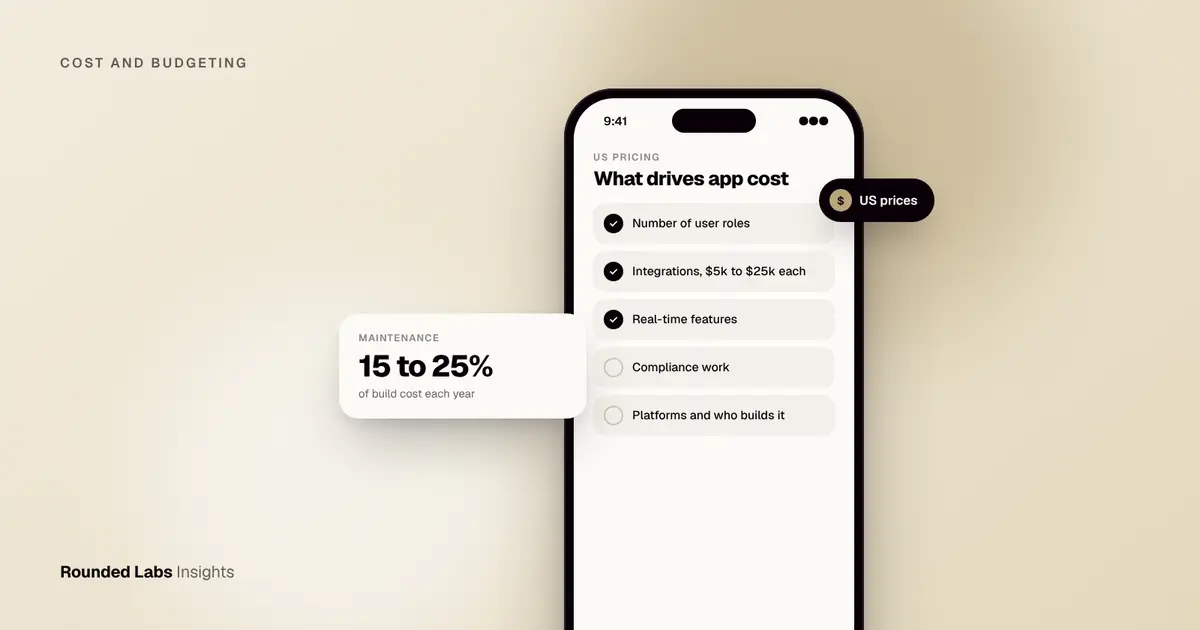
- The number of user types. A marketplace with buyers, sellers and admins is three products in one.
- Payments and money movement. Taking card payments is straightforward with Stripe; holding funds, payouts or trading adds regulation and cost (post:E15).
- Integrations. Each third-party system adds build and test time.
- Real-time features. Chat and live tracking need more backend work.
- Regulated data. Health or financial data adds security and compliance work (post:G1, SOC 2 for startups).
- Design ambition. Consumer apps need more polish to win attention than internal tools.
How do US and UK MVP budgets compare?
Rates are the main difference. Market estimates put major-city US agencies at $150 to $250 an hour and senior UK studios at $70 to $130. On an MVP of 600 to 900 hours, that gap is often $40,000 or more. How much does it cost to build an app in the US? 2027 prices in dollars has full app cost ranges, and Hiring a UK app development company from the US explains how US founders work with UK teams across time zones.
Planning your MVP? We will help you cut it to the version that proves your idea, and quote it in dollars. Book a 30-minute call with a co-founder.
A worked example: a two-sided services marketplace
A founder in Austin wants an app connecting homeowners with vetted local cleaners: search, booking, in-app payment, reviews and a simple admin panel.
| Item | Effort | Cost at UK studio rates |
|---|---|---|
| Discovery and design | 3 weeks | $9,000 to $13,000 |
| Customer and provider app (cross-platform) | 8 weeks | $26,000 to $36,000 |
| Backend, booking logic and admin | 6 weeks | $16,000 to $23,000 |
| Stripe Connect payments and payouts | 2 weeks | $6,000 to $9,000 |
| Testing and launch | 2 weeks | $5,000 to $7,000 |
| Total | About 4 months | $62,000 to $88,000 |
To cut that by a third, the founder could launch in one city, handle provider vetting manually in the admin panel, and leave reviews and in-app chat for version two.
How do you keep an MVP budget under control?
- Write down the one thing the MVP must prove. Every feature that does not help prove it waits.
- Do things manually first. Admin teams can approve users, match bookings or send reports by hand until volume justifies automation.
- Use off-the-shelf services for login, payments, email and analytics.
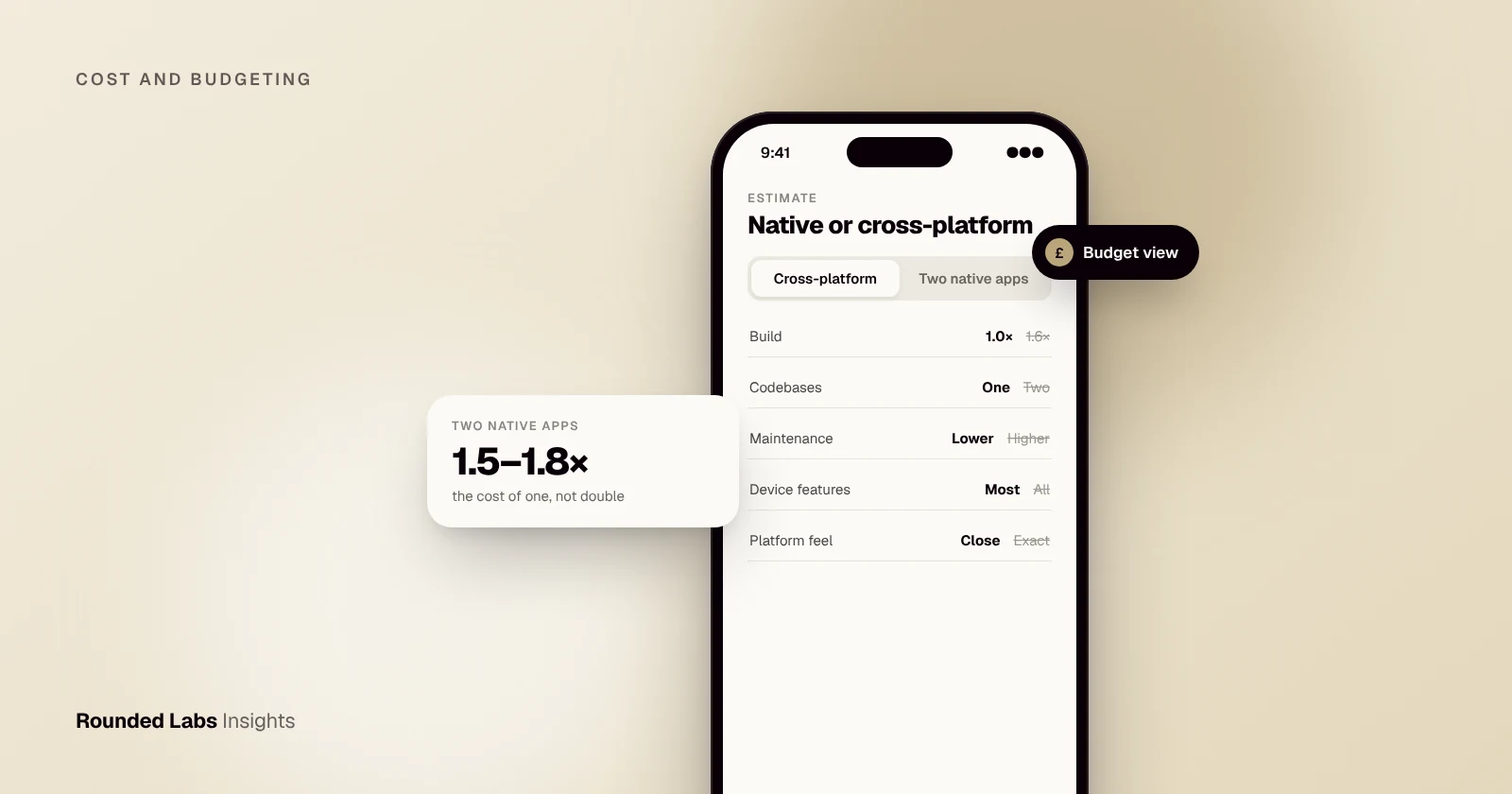
- Pick cross-platform unless you need deep device features.
- Fix the price for a clear scope and keep a separate budget for learning after launch.
- Validate before you build. How to validate an app idea before you spend £50k shows how to test demand cheaply.
What happens after the MVP?
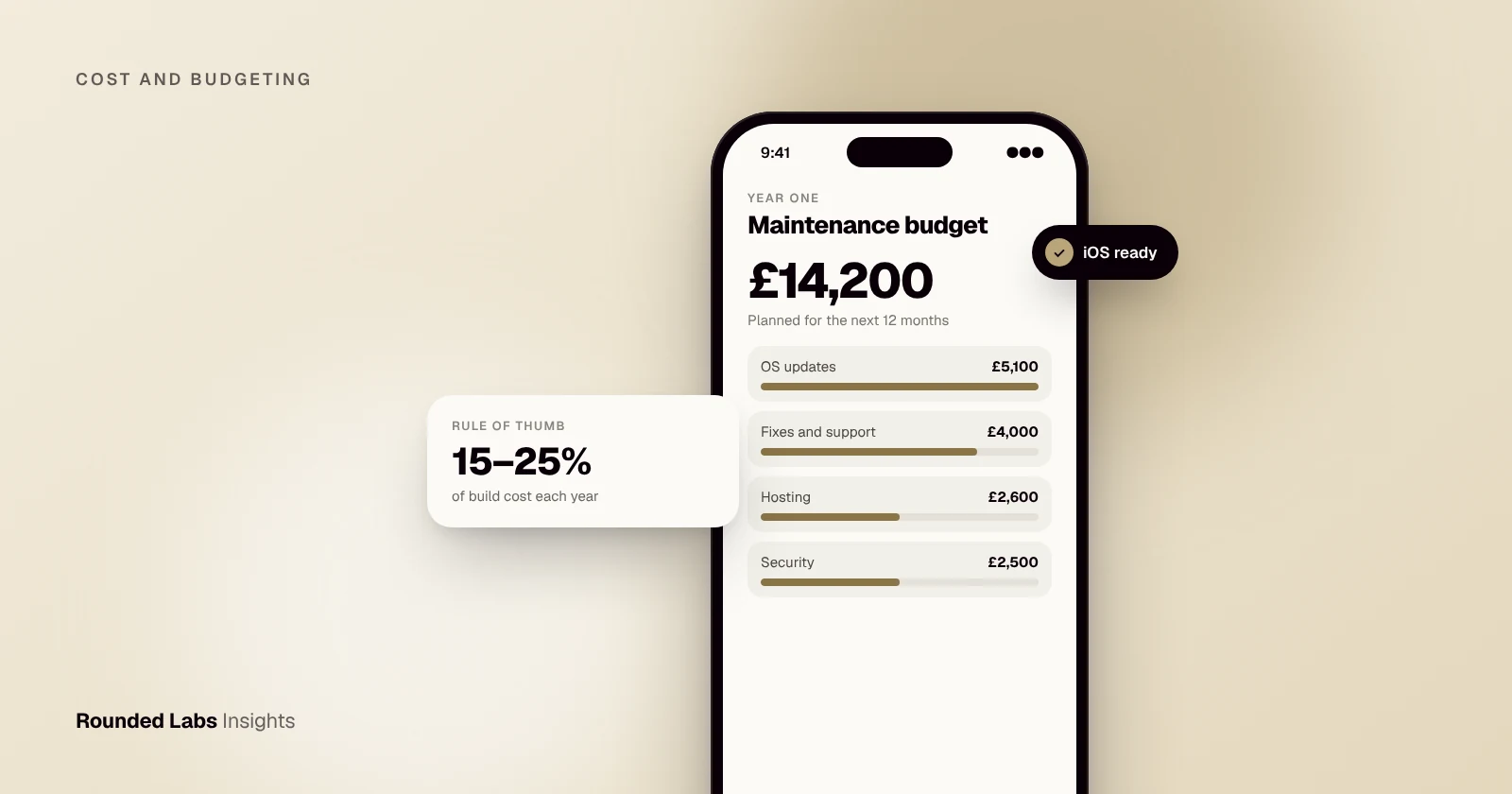
Expect to spend 20 to 30% of the MVP budget in the first three months after launch on fixes and changes driven by real users, then plan the next version from data. App retention: the metrics that matter after launch covers which metrics matter, and App maintenance cost in the US: a yearly budget in dollars has US maintenance budgets.
Frequently asked questions
What is a realistic MVP budget for a US startup?
Most US startups we speak to spend $50,000 to $120,000 on a coded MVP with a quality team. Below $30,000 usually means a prototype, no-code build or a very narrow scope.
Can I build an MVP for $10,000?
You can build a clickable prototype or a simple no-code MVP for around $10,000. A coded app with a backend, payments and two platforms is not realistic at that budget with an experienced team.
How long does an MVP take to build?
A lean MVP takes 8 to 12 weeks; a standard MVP with payments and admin takes 3 to 5 months. Discovery adds 2 to 4 weeks but usually shortens the build.
Should my MVP be native or cross-platform?
Cross-platform (Flutter or React Native) suits most MVPs, giving iOS and Android from one codebase. Native makes sense when the core value depends on device features or top performance. See Flutter vs React Native in 2026: which should you choose.
Do investors care who built the MVP?
Investors care that the product works, the code can scale and you own the IP. A clean codebase with full ownership and documentation makes due diligence easier.
Official sources and further reading
Talk it through with one of our co-founders. 30 minutes, no pressure.