

Healthcare apps in the US must do two jobs at once: be simple enough for patients and clinicians to use every day, and meet a demanding set of rules, mainly HIPAA, FDA rules for some software, and FTC rules for consumer health apps. A focused healthcare app typically costs $80,000 to $200,000 to build; platforms with EHR integration, telehealth and remote monitoring often cost $200,000 to $500,000 or more.
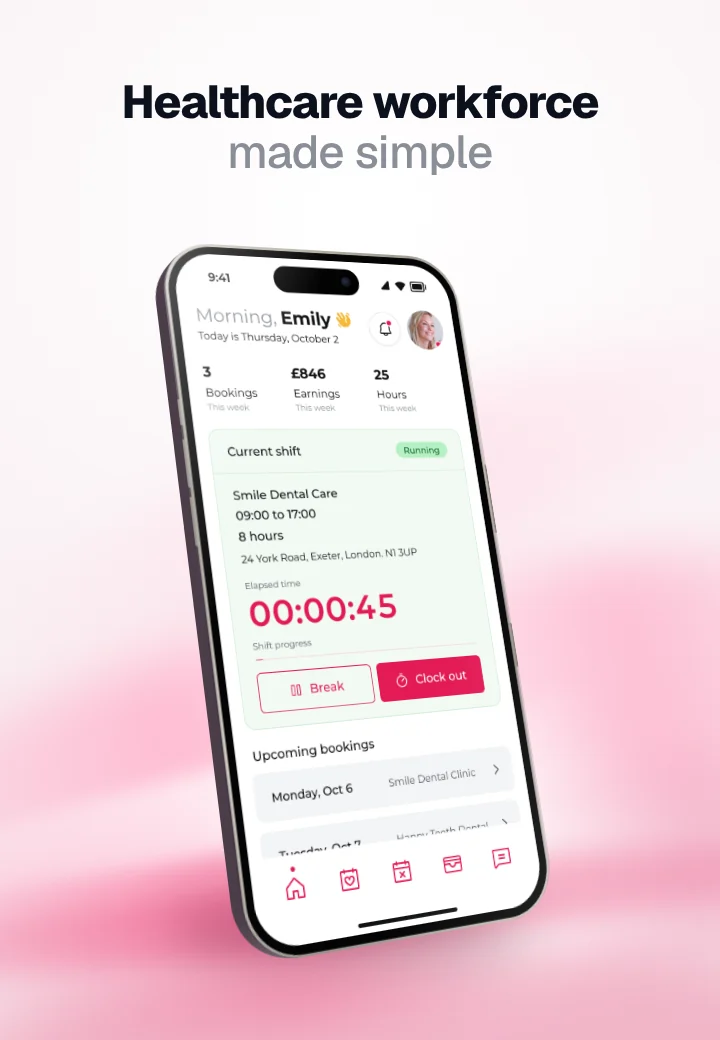
We have built apps where trust and compliance come first, from MoBank, the UK’s first mobile banking app, to First Agency Direct, a platform that matches dental practices with nurses and handles shifts, timesheets and compliance checks. This guide covers what US healthcare apps need, which rules apply, and what they cost. Cost figures are market estimates, not quotes, and rules change, so check the current official text before you rely on any detail.
Key facts
- Main US rules: HIPAA for protected health information, FDA for software that functions as a medical device, FTC for consumer health apps.
- EHR integration usually uses HL7 FHIR APIs, supported by major systems such as Epic and Oracle Health.
- Typical build: $80,000 to $200,000 for a focused app; $200,000 to $500,000+ for a platform.
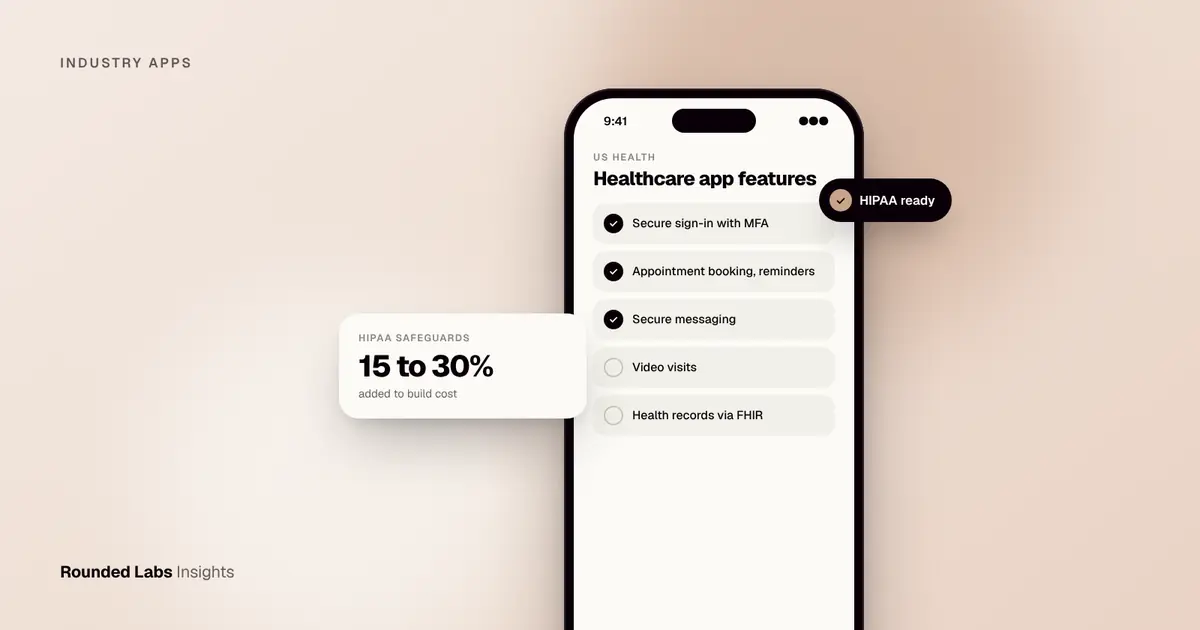
- HIPAA safeguards add 15 to 30% to build cost.
- Accessibility matters: patients include older adults and people with disabilities (post:G5).
What types of healthcare apps are built in the US?
| App type | Who uses it | Key rules |
|---|---|---|
| Telehealth and virtual care | Patients and clinicians | HIPAA, state licensure for clinicians |
| Patient portal and engagement | Patients of a provider or plan | HIPAA, CMS interoperability rules |
| Remote patient monitoring | Patients with chronic conditions, care teams | HIPAA, possibly FDA |
| Clinical workflow and staffing | Clinicians, nurses, administrators | HIPAA if PHI is involved |
| Digital therapeutics | Patients, prescribed by clinicians | FDA clearance, HIPAA |
| Consumer wellness | Individuals | FTC Act, Health Breach Notification Rule, state health data laws |
What features do healthcare apps need?
- Secure sign-in with multi-factor authentication for staff and biometrics on device.
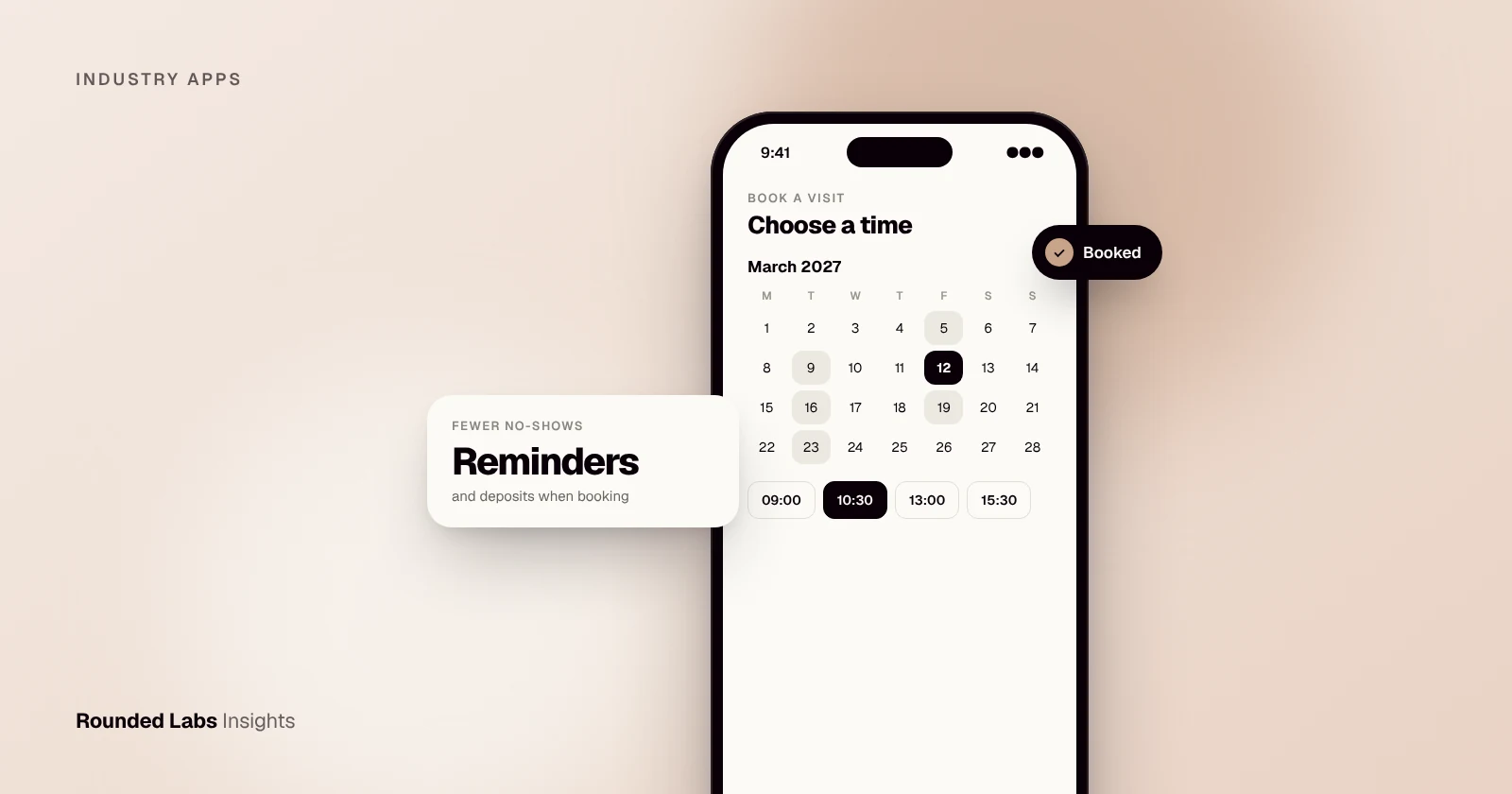
- Appointment booking and reminders, synced with practice systems.
- Secure messaging between patients and care teams, without health details in push notifications.
- Video visits using a HIPAA-eligible video provider.
- Health records access through FHIR APIs.
- Device data from wearables and Bluetooth devices (post:C13).
- Consent capture and audit logs.
- Accessibility: large text support, screen readers, plain language.
Which rules apply?
HIPAA. If your app handles protected health information for a covered entity or business associate, you need business associate agreements, Security Rule safeguards and breach processes. How to build a HIPAA-compliant app is our step-by-step guide.
FDA. Software that diagnoses, treats or prevents disease may be a medical device. The FDA’s digital health guidance explains which software functions it regulates and where it uses enforcement discretion (FDA Digital Health Center of Excellence). Wellness and administrative apps are usually outside device rules.
FTC. Consumer health apps outside HIPAA must not misuse or over-share health data. The FTC’s Health Breach Notification Rule requires notice when health data is disclosed without authorisation (FTC).
State laws. Washington’s My Health My Data Act and other state laws protect consumer health data; US state privacy laws and your app: CCPA and the rest covers state privacy laws.
Interoperability. The 21st Century Cures Act and the rules of the Office of the National Coordinator for Health IT (ASTP/ONC) push providers and EHR vendors to offer standard APIs, which makes FHIR integration more practical than it was.
Building a US healthcare app? We plan HIPAA, FDA and integration needs before the first line of code and price them in dollars. Book a 30-minute call with a co-founder.
How do you integrate with EHR systems?
Most modern integrations use HL7 FHIR APIs, often launched through SMART on FHIR so the app can sign in with the provider’s credentials. Steps:
- Confirm which EHR the provider uses and which FHIR resources are available.
- Register the app with the EHR vendor’s developer programme.
- Build and test against sandbox data.
- Complete the vendor’s review and the provider’s security assessment.
Allow 6 to 16 weeks for a first EHR integration, depending on the vendor and the provider’s IT team. What is an API integration explains API integrations more generally.
How much does a US healthcare app cost?
| Scope | Typical cost (UK studio, in $) | Typical cost (US agency) | Timeline |
|---|---|---|---|
| Focused patient app (booking, messaging, content) | $70,000 to $130,000 | $100,000 to $200,000 | 4 to 6 months |
| Telehealth app with video, scheduling and payments | $100,000 to $200,000 | $150,000 to $300,000 | 5 to 8 months |
| Platform with EHR integration and remote monitoring | $180,000 to $400,000 | $250,000 to $600,000 | 8 to 14 months |
How much does a HIPAA-compliant app cost breaks down the cost of HIPAA compliance itself, and How much does it cost to build an app in the US? 2027 prices in dollars covers general US app costs.
What we learned from regulated apps
On First Agency Direct, nurses needed to see shifts and submit timesheets quickly between appointments, while the platform had to check registrations and compliance documents before anyone was booked. The lesson carries into every healthcare project: build compliance into the workflow so it is automatic, rather than adding forms that busy clinicians skip.
Frequently asked questions
How much does it cost to build a healthcare app in the US?
A focused healthcare app usually costs $80,000 to $200,000 with a US agency, less with a UK studio. Platforms with EHR integration, telehealth and monitoring often exceed $200,000.
Does every health app need HIPAA compliance?
No. HIPAA applies when the app handles protected health information for a covered entity or business associate. Consumer wellness apps used independently are usually outside HIPAA but covered by FTC rules and state laws.
When does a health app need FDA clearance?
When it is a medical device, for example software that diagnoses a condition or drives treatment decisions, and the FDA does not exercise enforcement discretion for that function. Check the FDA’s digital health guidance early.
How long does it take to build a healthcare app?
Four to six months for a focused app, longer with EHR integration, device connectivity or FDA requirements.
Can a UK team build a US healthcare app?
Yes. A UK team can build to HIPAA requirements, sign a business associate agreement and integrate with US EHRs through FHIR. Check the team’s security practices and references. See Hiring a UK app development company from the US.
Official sources and further reading
Talk it through with one of our co-founders. 30 minutes, no pressure.